 An Entrepreneur Blog Management, Strategy, Internet, Technology, Social Networks, Organizational Change and more!
Few stories in contemporary African development carry as many contradictions as Tanzania’s relationship with its mineral wealth. The country sits atop some of the most significant untapped reserves on the continent – gold, graphite, nickel, tanzanite, natural gas, and an array of critical minerals that the global energy transition has suddenly made strategically invaluable. Yet the communities living nearest to those resources have often seen the least of the wealth they generate, while environmental costs accumulate in ways that formal reporting rarely captures. It is precisely this gap between extractive value and community reality that drives the investigative mission of Madini Today – one of the few dedicated journalism outlets tracking the intersection of extractive industries, environment, and communities across Tanzania with the depth and consistency the story demands.
Understanding Tanzania’s mining sector requires holding two things simultaneously in mind: the genuine scale of the opportunity, and the genuine complexity of the risks. Both are real. Both are growing. And the decisions being made in Dodoma, in London, in Beijing, and in the villages surrounding active mine sites right now will determine which of these two realities defines the country’s next generation.
The Resource Base: What Tanzania Actually Has
Tanzania’s mineral endowment is not a matter of speculation or promotional optimism. It is documented, extensively surveyed, and increasingly coveted by the major powers competing for critical mineral supply chains in the 2020s and beyond.
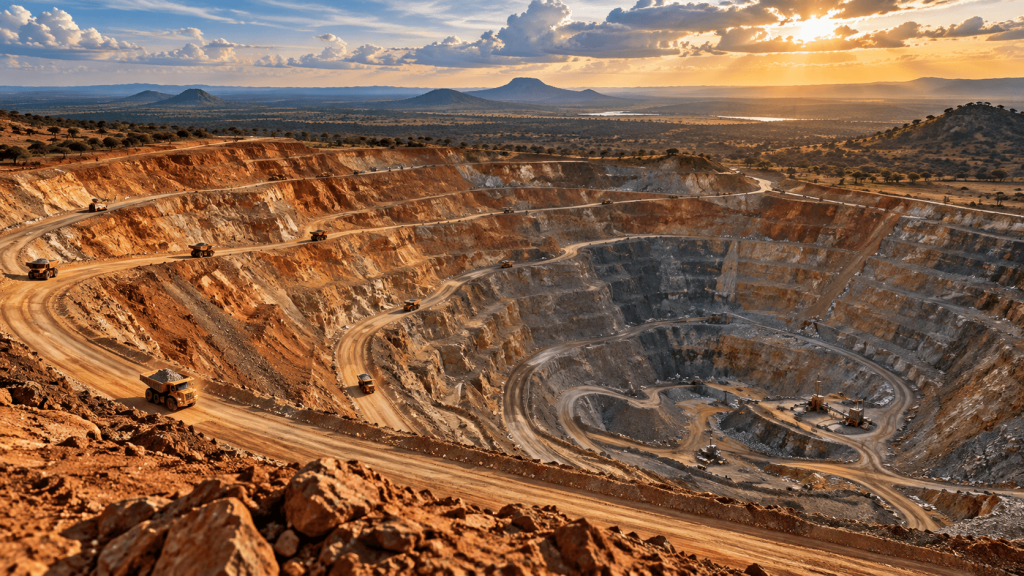
Gold remains the flagship commodity. Tanzania is consistently ranked among Africa’s top five gold producers, with the Lake Victoria Zone – a geological formation stretching across the northwestern part of the country – hosting several world-class deposits. The Geita Gold Mine, operated by AngloGold Ashanti, is one of the largest single gold mines on the continent. Barrick Gold’s North Mara and Bulyanhulu operations add further production weight. Together, gold exports represent a dominant share of Tanzania’s merchandise export earnings and a significant proportion of total government revenue from the extractive sector.
But gold, paradoxically, may not be Tanzania’s most strategically important mineral asset in the decade ahead. That distinction increasingly belongs to graphite.
Graphite: The Mineral the Energy Transition Cannot Do Without
Tanzania holds what geological surveys suggest is one of the largest graphite reserve bases in the world. Natural graphite is an essential component of lithium-ion battery anodes – the technology that powers electric vehicles, grid-scale energy storage, and consumer electronics. As the global EV market expands toward projections of hundreds of millions of vehicles on the road by 2035, demand for battery-grade graphite is expected to grow at rates that current production cannot satisfy.
China currently dominates graphite processing, handling approximately 90% of the world’s battery-grade graphite supply. Western nations, recognizing this dependency as a strategic vulnerability, have been actively seeking to develop alternative supply chains. Tanzania’s graphite deposits – particularly in the Lindi and Mtwara regions of the south – represent one of the most viable alternatives to Chinese supply that exists outside of existing Chinese-controlled operations.
The country launched 27 new graphite mines in 2025-2026, a significant acceleration that reflects both the scale of investment interest and the urgency that buyers in the battery supply chain are bringing to the market. Planet One’s strategic agreement with STAMICO – Tanzania’s state mining corporation – to establish a joint venture for graphite mining represents the kind of institutional partnership that signals serious long-term commitment rather than speculative positioning.
Natural Gas and the LNG Question
Offshore Tanzania holds natural gas reserves estimated at over 57 trillion cubic feet – one of the largest gas discoveries in Africa’s history. The planned liquefied natural gas (LNG) export terminal, a project valued at approximately 100 trillion Tanzanian shillings, represents what would be one of the largest single infrastructure investments in sub-Saharan African history if it reaches final investment decision.
The project has been in various stages of planning, negotiation, and delay for over a decade. Legal, fiscal, and commercial disputes between the government and the consortium of international oil companies involved – including Shell and Equinor – have repeatedly pushed back timelines. The Tanzanian Prime Minister’s recent statement that no legal sanctions are delaying the project signals a government eager to project confidence, but experienced observers of African LNG projects note that the gap between announcement and production is frequently measured in decades rather than years.
The geopolitical stakes are significant. European nations, accelerating their diversification away from Russian gas following the 2022 invasion of Ukraine, have identified East African LNG as a potential long-term supply source. If Tanzania’s LNG project advances, it transforms the country’s fiscal and geopolitical position substantially – providing a revenue stream that could fund development programs for generations while simultaneously making Tanzania a node in global energy security calculations.
Tanzanite and the Specialty Mineral Portfolio
Tanzania is the world’s only commercial source of tanzanite, a blue-violet gemstone found exclusively in a small mining area near Arusha in the shadow of Mount Kilimanjaro. The Tanzanian government has periodically moved to increase state participation in tanzanite mining and trading, recognizing that exclusive geological provenance is an asset that should generate more benefit for the country than it historically has.
Beyond tanzanite, Tanzania’s mineral portfolio includes nickel, copper, coal, iron ore, uranium, and rare earth elements – a breadth that has attracted interest from investors representing every major mining jurisdiction in the world.
The Governance Framework: Reform, Tension, and the 2017 Inflection Point
Tanzania’s relationship with foreign mining investment has been shaped decisively by the sweeping legislative reforms introduced under the late President John Magufuli in 2017. The Natural Wealth and Resources Acts – passed amid considerable controversy and investor alarm – fundamentally altered the terms on which foreign companies could operate in Tanzania’s extractive sector.
The key provisions included mandatory government free carry of at least 16% equity in all mining operations, strict requirements for local beneficiation and processing rather than export of raw materials, limits on international arbitration for dispute resolution, and enhanced requirements for local content in employment and procurement. The reforms were presented domestically as a reassertion of Tanzanian sovereignty over national resources – a correction of terms that had historically favored foreign investors at the expense of the state and communities.
The international investment community responded with alarm. Several major projects were suspended or cancelled. Acacia Mining – a major gold producer operating in Tanzania – entered a prolonged and bitter dispute with the government over alleged tax arrears that ultimately resulted in Barrick Gold acquiring the company and negotiating a settlement that gave the Tanzanian government a 16% free carry stake and a $300 million payment.
The long-term outcome of this confrontation has been instructive. After the initial shock of the 2017 reforms, investment has gradually returned – on terms that give Tanzania a larger share of the revenue. The government’s willingness to use its regulatory leverage, combined with the extraordinary quality of Tanzania’s mineral assets, has produced a more balanced negotiating dynamic than existed in the pre-2017 era. The recent revocation of 40 mineral prospecting licenses for non-compliance signals that the government continues to treat licensing as an active governance tool rather than a passive administrative function.
Critical Minerals and the New Geopolitics of African Resources
The global competition for critical minerals – the metals and materials essential to batteries, semiconductors, renewable energy infrastructure, and defense systems – has fundamentally changed the context in which Tanzania’s mineral sector operates. What was once primarily a bilateral relationship between a developing country and its foreign investors now plays out against a backdrop of US-China strategic competition, European supply chain anxiety, and a wave of African governments reasserting control over resource decisions that previous generations were less equipped to contest.
Tanzania has positioned itself deliberately at the intersection of these competing interests. The country maintains diplomatic and economic relationships with China – a major investor and buyer of Tanzanian raw materials – while simultaneously engaging with Western nations and development finance institutions interested in securing non-Chinese sources of critical minerals.
This balancing act is not unique to Tanzania, but the scale of Tanzania’s mineral endowment makes the stakes of getting it right unusually high. A country that successfully attracts investment across competing blocs, maintains regulatory credibility with all parties, and captures sufficient revenue to fund genuine development programs could achieve something that has eluded most resource-rich African nations: sustained, broadly shared economic transformation from extractive wealth.
Environmental Costs: The Ledger That Official Accounts Leave Incomplete
No honest assessment of Tanzania’s mining sector can ignore the environmental dimension – and the environmental record of large-scale mining in Tanzania, as in most of the world, is substantially worse than the promotional materials of mining companies and government agencies suggest.
Cyanide is the processing chemical of choice for gold extraction, and its use creates significant risks for water systems in mining areas. Mercury – used informally by artisanal and small-scale gold miners who operate across the Lake Victoria Zone and other gold-bearing areas – accumulates in aquatic food chains with documented consequences for the health of communities that depend on fish as a primary protein source. The scale of artisanal gold mining in Tanzania is substantial: the sector employs an estimated one to two million people, most of them operating with minimal regulatory oversight and no access to safer processing alternatives.
Deforestation around mining areas is pervasive. Pit development removes vegetation cover. Tailings storage facilities, when managed poorly, can release toxic material into surrounding land and water systems. The pace at which new mining licenses are granted has historically outrun the capacity of environmental regulatory agencies to conduct meaningful impact assessment or enforcement.
The National Environment Management Council (NEMC) has received expanded enforcement authority from the government – a recognition that the existing regulatory framework was insufficient for the scale of environmental challenge the sector presents. Whether enhanced authority translates into effective enforcement depends on factors – budget, staffing, political independence, and willingness to act against economically powerful actors – that are not resolved by a legislative grant of powers alone.
Community Rights: The Gap Between Law and Reality
Tanzanian law provides for community consultation before mining operations begin and for compensation when communities are relocated to make way for extraction. The gap between these legal provisions and their implementation on the ground is wide, well-documented, and a persistent source of tension and protest in mining-affected communities across the country.
Land rights in Tanzania operate under a dual system – statutory rights granted under formal law and customary rights recognized under traditional community governance – that creates ambiguity which has historically been resolved in ways that favor the interests of investors and the state over those of affected communities. Compensation for lost land and livelihoods has frequently been inadequate, delayed, or contested. Communities displaced by large mining operations have often found themselves worse off economically than before the mining company arrived, despite the nominal presence of community development agreements in their contracts.
The communities most affected by Tanzania’s mineral extraction are typically among the country’s most economically vulnerable – rural, with limited political representation, dependent on the land and water systems that mining most directly affects. The disconnect between the macroeconomic significance of Tanzania’s mining sector and the microeconomic reality of communities adjacent to mine sites is one of the defining failures of the current model.
Some mining companies operating in Tanzania have made genuine investments in community development programs – schools, clinics, water infrastructure, local employment initiatives. These efforts are real and in some cases significant. They do not, however, substitute for a structural model that ensures communities capture a predictable, meaningful share of the value generated from resources beneath their feet.
Green Mining: Aspiration and Emerging Reality
The concept of green mining – extracting minerals in ways that minimize environmental damage, reduce carbon emissions, and restore ecosystems affected by operations – has moved from environmental NGO talking point to genuine industry and government agenda item in Tanzania, driven partly by the requirements of buyers in the battery and energy supply chains who increasingly demand environmental credibility from their suppliers.
Solar-powered mine sites are emerging. Reforestation requirements are being attached to new licenses. Biodiversity offset programs are being developed. The Tanzania Development Vision 2050 explicitly incorporates sustainability principles into its extractive sector framework.
The gap between aspiration and demonstrated performance remains large. But the direction of travel is meaningful. Buyers of Tanzanian graphite for European battery supply chains are asking questions about environmental and social standards that did not feature in mining sector discussions a decade ago. This external pressure – supplemented by domestic advocacy from civil society and investigative journalism – is creating accountability mechanisms that the regulatory system alone has not consistently delivered.
The Role of Independent Journalism in Accountability
Effective governance of a complex extractive sector requires good information – about what is actually happening at mine sites, about the real terms of contracts between governments and investors, about the environmental and social consequences of specific operations, and about the gap between official claims and documented reality. In Tanzania’s case, the production of this information has depended critically on a small number of civil society organizations and independent media outlets willing to investigate and publish findings that are often unwelcome to powerful interests.
Investigative journalism about extractive industries faces particular challenges: the technical complexity of mining and financial arrangements, the legal risks of reporting on politically connected actors, the financial pressures facing independent media in markets with limited advertising revenue, and the physical risks that occasionally accompany attempts to document conditions at active mine sites or in mining communities.
The accountability function that journalism serves in this sector is not decorative. Contract transparency – the publication of the actual terms on which governments grant mining rights to foreign companies – has been shown across multiple African countries to improve the fiscal terms governments receive and to reduce the opportunities for corruption in licensing processes. Community-level reporting that documents displacement, contamination, and unmet commitments creates pressure on companies and regulators that is difficult to ignore when the evidence is specific, sourced, and public.
The Investment Outlook: Opportunity, Caution, and the Conditions for Success
For investors evaluating exposure to Tanzania’s extractive sector, the picture is one of genuine opportunity constrained by genuine risk – and the balance between these two realities is more favorable than it was five years ago in several respects, and less favorable in others.
The quality of Tanzania’s mineral assets is not in question. The graphite deposits are world-class. The gold belt is proven and productive. The gas reserves are among the largest in Africa. The country’s geological survey program – accelerated under recent government investment – is generating new data that will support additional discoveries.
The fiscal and regulatory environment is more demanding than it was before 2017, which means that projects must meet a higher bar to be economically viable. This is not necessarily negative for long-term investors – it means that projects that do proceed are structured on terms that are more likely to maintain government and community support through the operational life of the mine, reducing the risk of renegotiation or disruption that has historically been a significant source of return erosion in African mining.
The infrastructure gap remains a constraint. Tanzania’s road network, rail capacity, and port facilities – though improving under ongoing government investment – still limit the speed at which new mining areas can be brought to production and the cost at which product can reach export markets. The planned dry port in Tanga, expanded inland container terminal capacity in Dar es Salaam, and ongoing road construction in resource-producing regions all address this constraint, but the pace of infrastructure improvement has historically lagged the pace of licensing activity.
What the Next Decade Will Determine
The trajectory of Tanzania’s mining sector over the next decade will be shaped by a set of interconnected choices that no single actor controls but all significant actors influence.
The government’s choices about contract terms, regulatory enforcement, revenue allocation, and community rights will determine whether mining generates the kind of broadly shared development impact that justifies the environmental and social costs. The choices of international investors about environmental standards, community engagement, and tax compliance will determine whether the sector’s growing revenue base translates into genuine improvement in the lives of Tanzanians or primarily into returns for distant shareholders. The choices of buyers – the battery manufacturers, electronics companies, and energy utilities that ultimately consume Tanzania’s mineral output – about the standards they require of their supply chains will increasingly shape what responsible practice looks like on the ground.
And the choices of civil society, community organizations, and independent journalists about what to investigate, document, and publish will determine whether the information needed to hold all of these actors accountable actually reaches the audiences that can act on it.
Tanzania stands at a moment when the convergence of geological endowment, global demand for critical minerals, and growing domestic institutional capacity creates a genuine possibility of a different outcome than the resource curse dynamic that has characterized much of African extractive history. Whether that possibility is realized depends on governance quality, accountability mechanisms, and the willingness of the country’s leaders – in government, in business, and in civil society – to prioritize the long-term over the immediate, and the many over the few.
Frequently Asked Questions
What minerals does Tanzania produce?
Tanzania produces gold, graphite, tanzanite, nickel, copper, coal, diamonds, and natural gas. Gold is the largest single commodity by export value. Graphite is increasingly significant given its role in electric vehicle battery production. Tanzania is the world’s only commercial source of tanzanite. The country also holds large offshore natural gas reserves currently under development for LNG export.
Why is Tanzania’s graphite important globally?
Natural graphite is an essential component of lithium-ion battery anodes used in electric vehicles and energy storage systems. Tanzania holds one of the largest graphite reserve bases in the world. As the global electric vehicle market expands, demand for battery-grade graphite is projected to outpace current supply significantly. Western nations seeking to reduce dependence on Chinese graphite processing have identified Tanzania as a key potential alternative source.
How did Tanzania’s 2017 mining reforms change the sector?
The 2017 Natural Wealth and Resources Acts introduced mandatory government free carry of at least 16% equity in all mining operations, requirements for local processing rather than raw material export, limits on international arbitration, and enhanced local content requirements. The reforms initially alarmed foreign investors and caused some project suspensions, but investment has gradually returned on terms more favorable to Tanzania. The reforms are widely regarded as having improved the fiscal terms Tanzania receives from its mineral resources.
What environmental problems does mining cause in Tanzania?
The main environmental concerns include cyanide contamination of water systems from gold processing, mercury pollution from artisanal and small-scale mining across the Lake Victoria Zone, deforestation around mine sites, and inadequately managed tailings storage. Mercury accumulation in aquatic food chains affects communities dependent on fish. Artisanal mining employs an estimated one to two million people in Tanzania with minimal environmental oversight.
What is Tanzania’s LNG project?
Tanzania’s offshore natural gas reserves – estimated at over 57 trillion cubic feet – are the basis for a planned liquefied natural gas export terminal valued at approximately 100 trillion Tanzanian shillings. The project involves a consortium of international companies including Shell and Equinor. After over a decade of planning and delays related to commercial, fiscal, and legal disputes, the project remains in development. If completed, it would be one of the largest infrastructure investments in sub-Saharan African history and would significantly alter Tanzania’s fiscal and geopolitical position.
How are mining communities affected in Tanzania?
Communities adjacent to mining operations frequently face land displacement, inadequate compensation, contamination of water and land, and limited access to the economic benefits of nearby extraction. Tanzanian law provides for community consultation and compensation, but implementation has been consistently criticized by community organizations, civil society, and independent journalists. The gap between legal provisions and actual practice in community rights protection is one of the most persistent challenges in Tanzania’s extractive sector governance.
What is green mining and how does it apply to Tanzania?
Green mining refers to extractive practices that minimize environmental damage, reduce carbon emissions, and restore affected ecosystems. In Tanzania, green mining initiatives include solar-powered mine sites, reforestation requirements attached to licenses, and biodiversity offset programs. The Tanzania Development Vision 2050 incorporates sustainability principles for the extractive sector. External pressure from buyers – particularly in European battery supply chains – who require environmental and social standards from their suppliers is driving increasing adoption of green mining practices.
What role does investigative journalism play in Tanzania’s mining sector?
Independent investigative journalism about extractive industries provides accountability for government, investors, and regulators by documenting the gap between official claims and ground-level reality. In Tanzania’s case, investigative reporting has covered contract terms, environmental violations, community displacement, and regulatory enforcement failures. Contract transparency – a direct product of journalism and civil society advocacy – has been shown to improve the fiscal terms governments receive and reduce corruption in licensing. The technical complexity, legal risks, and financial pressures of this type of journalism make dedicated outlets focused on the extractive sector particularly valuable.